Clinical Cardiac Electrophysiology Fellowship
Training Structure
Overview
The University of Iowa Clinical Cardiac Electrophysiology Fellowship is structured to provide progressive autonomy through training across three distinct clinical environments, each offering a unique patient population and procedural experience. Fellows graduate with comprehensive exposure to complex catheter ablation, cardiac implantable electronic devices, lead extraction, left atrial appendage occlusion, and advanced arrhythmia management while training alongside nationally recognized faculty in both tertiary referral and community-based practice settings.

University Campus
The University of Iowa Health Care University Campus is the fellowship's primary training site. As Iowa's only comprehensive academic medical center and quaternary referral center, the 811-bed hospital cares for patients with complex arrhythmias, advanced heart failure, congenital heart disease, and inherited arrhythmia syndromes.
Fellows train in three dedicated electrophysiology laboratories, with capacity for additional procedural space as volume grows. Working one-on-one with electrophysiology faculty, fellows participate in the full continuum of care, including outpatient evaluation, procedural planning, catheter ablation, device implantation, lead extraction, inpatient consultation, and longitudinal follow-up. Training emphasizes complex referral cases, advanced mapping technologies, challenging ablation strategies, and complex device therapies, with graduated procedural autonomy throughout the fellowship.

Downtown Campus
The University of Iowa Health Care Downtown Campus provides experience in a high-volume community electrophysiology practice within the University of Iowa Health Care system. Fellows rotate to the Downtown Campus approximately every fifth week, gaining exposure to efficient procedural workflows and common electrophysiology conditions, including atrial fibrillation, atrial flutter, supraventricular tachycardia, device implantation, generator replacements, and device revisions.
This complementary experience helps fellows refine procedural efficiency, develop clinical autonomy, and appreciate the differences between community and tertiary referral practice.

Veterans Affairs Health Care System
The Iowa City Veterans Affairs Health Care System offers fellows a unique environment focused on clinical autonomy, continuity of care, and academic development. Fellows care for veterans with a broad spectrum of cardiac rhythm disorders while working closely with electrophysiology faculty.
The rotation combines approximately two days of procedural experience each week with outpatient clinic, inpatient consultations, and longitudinal patient management. Dedicated time for research, manuscript preparation, board study, and independent learning allows fellows to further develop their academic interests while gaining increasing independence in clinical decision-making.
Breadth and Depth of Procedural Training
The University of Iowa offers one of the broadest procedural experiences in clinical cardiac electrophysiology. Fellows routinely exceed minimum procedural requirements established by the American Board of Internal Medicine and graduate comfortable performing both common and highly specialized procedures.
Training includes experience with:
Catheter Ablation
- Atrial fibrillation (radiofrequency and pulsed field ablation)
- Typical and atypical atrial flutter
- AV nodal reentrant tachycardia (AVNRT)
- Accessory pathways
- Atrial tachycardia
- Premature ventricular complexes (PVCs)
- Ventricular tachycardia, including substrate-based ablation
- AV node ablation
Cardiac Implantable Electronic Devices
- Permanent pacemakers
- Implantable cardioverter-defibrillators (ICDs)
- Cardiac resynchronization therapy (CRT-P and CRT-D)
- Leadless pacemakers
- Subcutaneous ICDs
- Extravascular ICDs (EV-ICD)
Advanced Electrophysiology Procedures
- Lead extraction
- Left atrial appendage occlusion
- Vein of Marshall alcohol ablation
- Cardioneural ablation
- Convergent atrial fibrillation ablation
- Epicardial ventricular tachycardia procedures
- Complex ventricular tachycardia substrate modification
- Advanced extraction techniques utilizing Penumbra, AngioVac, and intravascular lithotripsy
Clinical Rotations
Clinical Rotations – dropdown
| Rotation | Approximate Time (per academic year) |
|---|---|
| University of Iowa Main Campus | 27 weeks |
| University of Iowa Downtown Campus | 10 weeks |
| Iowa City VA Health Care System | 12 weeks |
| Vacation | 3 weeks |
Sample schedule:
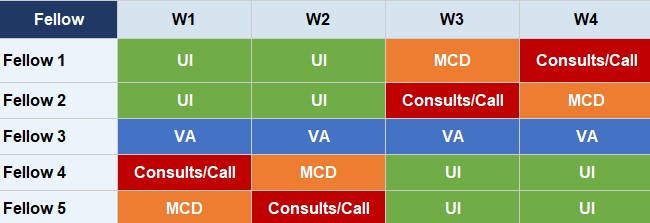
Call Responsibilities
Call is shared among the four electrophysiology fellows (and the AIRE 2+2 fellow, when applicable), with each fellow taking primary EP call for one week every four to five weeks.
A general cardiology fellow serves as the first contact for inpatient consults, allowing EP fellows to focus on electrophysiology-specific issues. Fellows manage post-procedure patient calls and urgent EP consults, gaining experience in peri-procedural and longitudinal care. Overnight call is uncommon and is generally limited to urgent procedures such as temporary-permanent pacemaker placement. Fellows are not routinely required to come in overnight for device interrogations, MRI programming, or operating room device management.
Vacation
Fellows receive three weeks of paid vacation each academic year. Vacation is scheduled to maintain clinical coverage while providing flexibility for personal time. Additional leave is available in accordance with University of Iowa Graduate Medical Education policies.
Conferences
Didactic education complements the fellowship's high procedural volume through a comprehensive conference curriculum focused on clinical electrophysiology, case-based learning, and multidisciplinary collaboration.
Regular conferences include:
- Electrophysiology Case Conference
- Electrophysiology Journal Club
- Morbidity & Mortality Conference
- Cardiology Grand Rounds
- Internal Medicine Grand Rounds
- Multidisciplinary conferences (including Heart Failure and Transplant)
- Board review and visiting professor lectures
A unique feature of the program is the monthly off-site EP Journal Club, where faculty and trainees review landmark and contemporary electrophysiology literature in an interactive setting.
Education also occurs daily in the EP laboratory through direct faculty mentorship, procedural teaching, case planning, and review of intracardiac electrograms and electroanatomic mapping. Fellows are encouraged and supported to present research and attend regional and national scientific meetings.